


























DAT Incoterm: Delivered at Terminal under Incoterms 2010


Quick overview
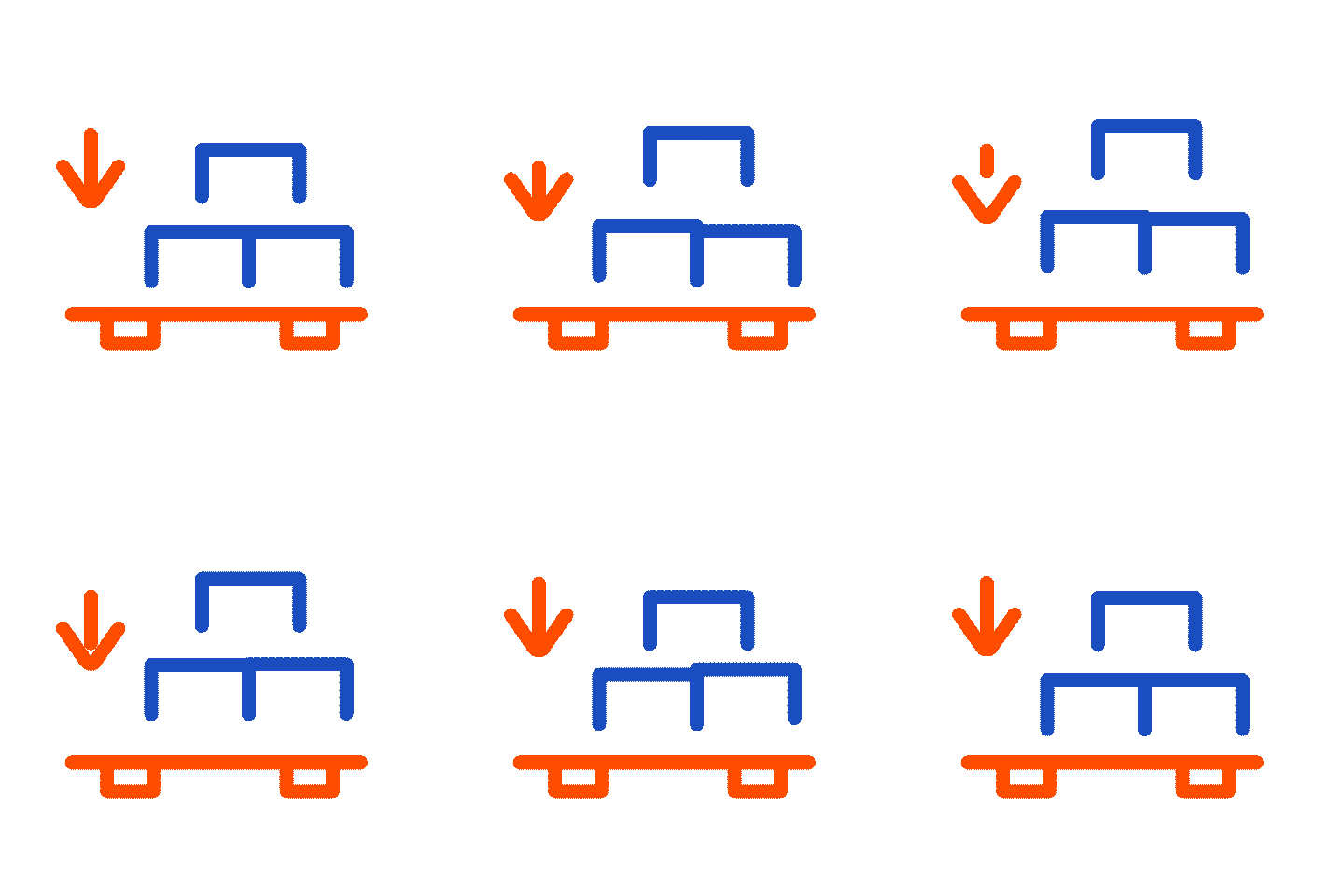
DAT means Delivered at Terminal. It is an Incoterms 2010 rule under which the seller delivers the goods after unloading them from the arriving means of transport at the named terminal.
The seller bears the risk up to that delivery point and handles the agreed carriage, unloading and export formalities. The buyer handles import clearance and applicable import duties and taxes.
Incoterms 2020 replaced the DAT name with DPU, Delivered at Place Unloaded, emphasizing that the destination can be any suitable named place. An existing contract specifying DAT under Incoterms 2010 is not automatically rewritten as DPU.
What DAT means in an existing contract
DAT can be used for any transport mode or a multimodal shipment. Under the 2010 rule, terminal has a broad meaning and can include a quay, warehouse, container yard or road, rail or air terminal.
Delivery occurs when the unloaded goods are placed at the buyer’s disposal at the agreed terminal and point. The exact location matters because it determines where the seller’s delivery obligation and risk end.
Specify the terminal, delivery point and rules edition clearly. For example:
DAT [named terminal and delivery point], Incoterms 2010
Seller and buyer responsibilities
| Responsibility | Seller | Buyer |
|---|---|---|
| Suitable packaging and marking | Responsible under the rule | Provides relevant agreed information where needed |
| Export clearance | Responsible | Assists where required |
| Carriage to the named terminal | Arranges and pays | Receives the goods at the agreed point |
| Unloading for DAT delivery | Responsible | Takes delivery after unloading |
| Import clearance, duties and taxes | Assists where required | Responsible |
| Transport beyond the DAT delivery point | Not included in the DAT delivery obligation | Arranges if needed |
Check the sales contract, transport arrangements and any specific variations agreed by the parties. Customs formalities must be completed when required; the responsibilities are not simply deferred until after unloading.
When does risk transfer under DAT?
Risk normally transfers when the goods have been unloaded from the arriving means of transport and placed at the buyer’s disposal at the named terminal.
Vessel arrival or the first discharge at an intermediate port does not automatically complete delivery. Check the agreed point and the actual transport arrangement.
For example, if DAT names an inland terminal, delivery must be assessed at that terminal rather than automatically at the seaport where the vessel first discharges.
DAT, DPU and DAP compared
| Rule and edition | Agreed destination | Delivery condition |
|---|---|---|
| DAT — Incoterms 2010 | Named terminal, interpreted broadly | Goods unloaded and placed at the buyer’s disposal |
| DPU — Incoterms 2020 | Any suitable named place | Goods unloaded and placed at the buyer’s disposal |
| DAP — Incoterms 2020 | Named place | Goods on the arriving means of transport, ready for unloading |
The central DAP/DPU distinction is unloading: the seller delivers after unloading under DPU and before unloading under DAP. It is not a terminal-versus-address distinction.
Read our DPU guide for the 2020 rule and our DAP guide for delivery before unloading.
Insurance under DAT
DAT does not oblige either party to purchase cargo insurance. The parties should assess their respective risks and agree suitable coverage where needed.
Insurance does not change the contractual delivery point. Check that any policy covers the relevant journey, handling and unloading risks, subject to its terms.
Should you change DAT to DPU in a contract?
For a new contract using Incoterms 2020, use DPU when the seller is to deliver after unloading at the agreed place. First confirm that unloading is practicable and that the seller can arrange it.
For an existing DAT contract, changing the abbreviation should be an agreed contractual update. Review the named destination, unloading arrangements, customs obligations, charges and edition together.
Do not choose DAP simply because delivery is to an inland address. The choice also depends on who is to perform unloading and when delivery and risk transfer should occur.
If the seller is also expected to handle import clearance and import duties, review DDP responsibilities separately rather than assuming they are included in DAT or DPU.
Related Articles


