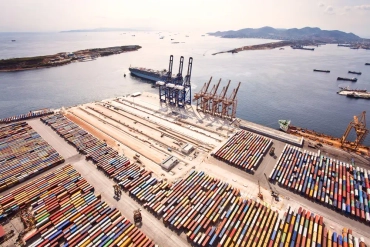

























World’s Busiest Cargo Airports for Air Freight
 Ports & Routes




Data source note: the global ranking and tonnage figures below use ACI World’s final 2024 cargo rankings, where global air cargo reached nearly 127 million metric tonnes and the top 20 cargo hubs handled 52.2 million tonnes.
The world’s busiest cargo airports play a central role in global trade, connecting manufacturers, e-commerce sellers, express parcel networks, pharmaceutical shippers, high-value goods, and time-sensitive supply chains across continents. While many global airports are famous for passenger traffic, the cargo rankings show a different map of aviation: hubs in Asia, North America, and the Middle East dominate because of their position on major trade lanes, express logistics networks, and long-haul air freight routes.
In 2024, global air cargo volumes rebounded strongly, supported by e-commerce growth, supply chain volatility, and demand for faster international transport. The world’s top cargo airports handled tens of millions of tonnes of freight, with Hong Kong, Shanghai Pudong, Memphis, Anchorage, and Louisville leading the global ranking.
Why These Airports Matter to Shippers
Cargo airport rankings are more than aviation statistics. The largest air freight hubs usually offer more airline capacity, stronger customs infrastructure, more freight forwarder coverage, specialized cargo terminals, and better trucking links into regional distribution networks. For shippers moving urgent or high-value cargo, choosing the right airport can influence transit time, reliability, available routes, and total shipping cost.
This is especially important when comparing air freight services with alternatives such as air express for smaller urgent shipments or ocean freight for less time-sensitive cargo.
1. Hong Kong International Airport (HKG)
Hong Kong International Airport was the world’s busiest cargo airport in 2024, handling 4,938,211 tonnes of freight. Its position reflects Hong Kong’s role as one of the most important air cargo gateways in Asia and a major connector for trade flows between China, Southeast Asia, Europe, and North America.
Hong Kong is especially important for electronics, e-commerce, high-value goods, perishables, and time-sensitive international shipments. Its strength comes from a combination of freighter services, belly cargo capacity, advanced cargo terminals, and access to the Greater Bay Area manufacturing base.
For shippers, Hong Kong is often one of the first airports considered for Asia-related air freight because of its scale, frequency, and wide global connectivity.
2. Shanghai Pudong International Airport (PVG)
Shanghai Pudong International Airport ranked second globally in 2024, handling 3,778,331 tonnes of cargo. It is mainland China’s most important international air cargo hub and a critical gateway for exports from the Yangtze River Delta, one of the world’s strongest manufacturing regions.
Pudong supports a wide range of cargo, including electronics, machinery, e-commerce parcels, consumer goods, automotive components, and high-value industrial shipments. Its importance has grown alongside China’s role in global manufacturing and cross-border e-commerce.
For importers and exporters working with China, Shanghai Pudong is a key airport when route frequency, export capacity, and access to eastern China suppliers matter.
3. Memphis International Airport (MEM)
Memphis International Airport ranked third in the world in 2024, handling 3,754,236 tonnes of cargo. Unlike many major cargo airports that rely heavily on international passenger networks, Memphis is primarily known for its express logistics role and its connection to large-scale parcel and overnight delivery operations.
Memphis is one of the clearest examples of how an airport can become globally important because of an integrated logistics network rather than passenger traffic. Its cargo strength comes from sorting capacity, express shipment flows, and strong connections across North America and global markets.
For shippers, Memphis is especially relevant for express freight, parcel movement, e-commerce distribution, and time-definite shipments moving through the United States.
4. Ted Stevens Anchorage International Airport (ANC)
Ted Stevens Anchorage International Airport ranked fourth globally in 2024, handling 3,699,284 tonnes of cargo. Anchorage is strategically positioned between Asia and North America, making it one of the world’s most important technical stop, refueling, and cargo transfer points.
Its location gives cargo airlines operational advantages on transpacific routes. Aircraft can stop in Anchorage for fuel, crew changes, or cargo transfer while serving major markets in Asia and the United States.
For shippers, Anchorage may not always be the origin or final destination, but it plays a major role behind the scenes in long-haul air freight routing, especially for Asia–North America trade lanes.
5. Louisville Muhammad Ali International Airport (SDF)
Louisville Muhammad Ali International Airport ranked fifth globally in 2024, handling 3,152,969 tonnes of cargo. Its cargo importance is closely tied to its role as a major express parcel and air sorting hub in the United States.
Louisville is particularly important for overnight delivery, parcel consolidation, e-commerce logistics, and time-sensitive domestic and international shipments. Like Memphis, it shows that cargo airport strength depends not only on geography but also on the logistics networks built around the airport.
For businesses using express delivery models, Louisville is one of the most important air cargo nodes in North America.
6. Incheon International Airport (ICN)
Incheon International Airport ranked sixth in 2024, handling 2,946,902 tonnes of cargo. It is one of Northeast Asia’s most important logistics hubs and a major gateway for South Korea’s export-driven economy.
Incheon is especially relevant for electronics, semiconductors, pharmaceuticals, automotive components, e-commerce, and high-value manufactured goods. Its cargo profile is supported by strong airline networks, modern logistics zones, and connections across Asia, North America, and Europe.
For shippers moving cargo to or from South Korea, Incheon is usually the primary air freight gateway.
7. Miami International Airport (MIA)
Miami International Airport ranked seventh globally in 2024, handling 2,753,450 tonnes of cargo. It is one of the most important air cargo gateways in the Americas and plays a major role in trade between North America, Latin America, and the Caribbean.
Miami is especially strong in perishables, pharmaceuticals, e-commerce, high-tech goods, flowers, seafood, and temperature-sensitive cargo. Its geographic position makes it a natural consolidation and distribution point for north-south cargo flows in the Western Hemisphere.
For shippers moving cargo between the United States and Latin America, Miami is often one of the most practical and strategically important airports.
8. Hamad International Airport (DOH)
Hamad International Airport in Doha ranked eighth globally in 2024, handling 2,616,849 tonnes of cargo. Its rise reflects the importance of the Middle East as a global air freight bridge between Asia, Europe, Africa, and North America.
Doha benefits from its geographic position, long-haul airline network, and role as a major cargo hub for connecting international shipments. It is particularly relevant for freight moving across long-distance trade lanes where hub connectivity and fast transfer times matter.
For shippers, Doha is important when routing cargo between Asia, Europe, Africa, and the Middle East.
9. Guangzhou Baiyun International Airport (CAN)
Guangzhou Baiyun International Airport ranked ninth globally in 2024, handling 2,381,901 tonnes of cargo. Its cargo role is closely connected to the Greater Bay Area and southern China’s manufacturing, e-commerce, and export economy.
Guangzhou supports high volumes of consumer goods, electronics, e-commerce shipments, industrial products, and regional distribution cargo. Its position complements other major cargo gateways in southern China, including Hong Kong and Shenzhen.
For businesses sourcing from southern China, Guangzhou Baiyun can be a strong air freight option, especially when origin location and trucking distance make it more practical than other regional airports.
10. Taiwan Taoyuan International Airport (TPE)
Taiwan Taoyuan International Airport ranked tenth globally in 2024, handling 2,270,974 tonnes of cargo. It is Taiwan’s main international air cargo gateway and a key hub for high-value manufacturing exports.
Taoyuan is especially important for semiconductors, electronics, precision components, machinery, and technology supply chains. Its role in global cargo is closely linked to Taiwan’s position in advanced manufacturing and electronics production.
For shippers moving high-value technology cargo, Taoyuan is one of Asia’s most important air freight airports.
Other Airports Worth Watching
Beyond the top 10, several airports remain highly important in global air cargo. Dubai International, Los Angeles, Chicago O’Hare, Singapore Changi, Tokyo Narita, Frankfurt, Istanbul, Paris Charles de Gaulle, Shenzhen, and Cincinnati all ranked among the global top 20 in 2024.
These airports show how air cargo strength can come from different factors: express parcel networks, major passenger hubs with belly cargo capacity, manufacturing regions, geographic transfer points, and specialized international trade corridors.
What These Rankings Mean for Importers and Exporters
The global cargo airport ranking can be understood in four main layers.
First, Asia dominates the top of the ranking, with Hong Kong, Shanghai, Incheon, Guangzhou, and Taipei all appearing in the global top 10. This reflects Asia’s central role in manufacturing, e-commerce, electronics, and high-value exports.
Second, North America remains critical for express logistics, with Memphis, Anchorage, Louisville, and Miami all ranking among the world’s busiest cargo airports. These airports are essential for parcel networks, transpacific routing, domestic distribution, and Americas trade.
Third, Middle Eastern hubs are increasingly important, with Doha ranking in the top 10 and Dubai just outside it. These airports benefit from geographic positioning between major regions and strong long-haul cargo connectivity.
Fourth, cargo strength does not always follow passenger traffic. Some of the world’s most important freight airports are not the world’s largest passenger airports. Memphis, Anchorage, and Louisville are clear examples of airports whose cargo role is driven by logistics infrastructure, express networks, and strategic routing rather than passenger volume.
Choosing the Right Air Freight Strategy Globally
Airport rankings are useful, but the best routing decision depends on the shipment. Shippers should consider origin and destination, airline frequency, customs processes, commodity type, cargo dimensions, cut-off times, and whether the shipment requires airport-to-airport, door-to-door, or express service.
For urgent or high-value shipments, air freight may be the right option. For smaller parcels or time-critical deliveries, air express can be more suitable. For less urgent cargo, businesses may want to compare air costs with full container load shipping or less-than-container load shipping.
Air freight pricing also depends heavily on shipment dimensions. Before requesting quotes, shippers should understand chargeable and volumetric weight, since bulky cargo can be priced by volume rather than actual weight.
Documentation is another key factor. Even when a shipment moves through a major global cargo airport, delays can still occur because of missing invoices, customs issues, restricted commodities, or incorrect consignee details. Reviewing the correct shipping documents and checking estimated routing with the transit time calculator can help reduce avoidable disruption.
Conclusion
Hong Kong International Airport is the world’s largest cargo airport, but the global air freight network is much broader than one hub. Shanghai Pudong connects global trade with China’s manufacturing base, Memphis and Louisville anchor major express logistics networks, Anchorage supports transpacific cargo flows, and airports such as Incheon, Miami, Doha, Guangzhou, and Taipei serve highly specialized regional and international trade lanes.
For importers and exporters, the best cargo airport is not always the highest-ranked airport. It is the airport that best matches the shipment’s origin, destination, urgency, commodity type, customs requirements, and cost target. Understanding the world’s busiest cargo airports helps shippers make better routing decisions and choose the right balance between speed, reliability, and total logistics cost.
External References
- ACI World final 2024 global airport rankings
- ACI World 2024 busiest airports analysis
- Hong Kong International Airport air cargo overview
- Ted Stevens Anchorage International Airport air cargo information
- Louisville Muhammad Ali International Airport cargo information
- Miami International Airport cargo service development
- Incheon International Airport global logistics hub
- Guangzhou Baiyun International Airport cargo ranking update
- Taiwan Taoyuan International Airport cargo statistics
- 1. Why These Airports Matter to Shippers
- 2. Hong Kong International Airport (HKG)
- 3. Shanghai Pudong International Airport (PVG)
- 4. Memphis International Airport (MEM)
- 5. Ted Stevens Anchorage International Airport (ANC)
- 6. Louisville Muhammad Ali International Airport (SDF)
- 7. Incheon International Airport (ICN)
- 8. Miami International Airport (MIA)
- 9. Hamad International Airport (DOH)
- 10. Guangzhou Baiyun International Airport (CAN)
- 11. Taiwan Taoyuan International Airport (TPE)
- 12. Other Airports Worth Watching
- 13. What These Rankings Mean for Importers and Exporters
- 14. Choosing the Right Air Freight Strategy Globally
- 15. Conclusion
- 16. External References
Related Articles