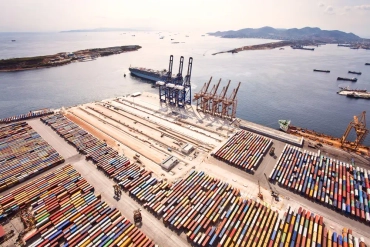


























5 Major Ports in the UK
 Ports & Routes


Quick Overview
The five major ports in the UK are London, the Humber Ports, Milford Haven, Felixstowe and Southampton. In 2024, all UK ports handled 429.7 million tonnes of freight, with major ports alone handling 421.0 million tonnes. The Port of London, the largest by tonnage, reported nearly 57 million tonnes in 2025.
1. Port of London
The Port of London is currently the UK’s largest port by cargo tonnage. The Port of London Authority reported 51.6 million tonnes in 2023, then almost 57 million tonnes in 2025, the highest level since 1973. That 2025 result followed a 9% year-over-year increase, confirming London’s importance not just as a consumer-market gateway but also as a major hub for containers, trailers, aggregates, oil, and construction-related cargo.
London’s strength is its direct access to the UK’s biggest consumption zone and one of Europe’s densest warehousing and distribution regions. That makes it especially relevant for importers serving Greater London, the Southeast, and inland distribution networks linked to the Thames corridor.
2. Humber Ports
The Humber port complex, which includes Immingham, Grimsby, Hull, and Goole, remains one of the UK’s most important freight systems. ABP says its Humber ports handled 45.7 million tonnes of goods in 2024. That makes the Humber one of the country’s largest cargo regions, with particular strength in bulk freight, energy-linked cargo, agri-bulk, automotive flows, and industrial shipping.
The Humber’s importance comes from scale and geography. It serves major industrial and manufacturing zones in northern England and connects efficiently to the Midlands and beyond. For many shippers, it is one of the most practical gateways when total inland logistics cost matters as much as ocean access.
3. Port of Milford Haven
Milford Haven remains one of the UK’s most strategically important ports because of its energy role. Its 2024 annual report says the port moved 32.8 million tonnes of cargo, down from 34.7 million tonnes in 2023, while maintaining its position as the UK’s leading energy port. The port’s performance is closely tied to LNG flows, refinery activity, and global energy-market conditions.
Milford Haven is not a typical container gateway, but it is still one of the UK’s most important ports because energy cargo is fundamental to national supply chains. That makes it essential in any serious ranking based on trade significance rather than container marketing visibility alone.
4. Port of Felixstowe
Felixstowe remains the UK’s best-known container port and still describes itself as Britain’s biggest and busiest container gateway, handling more than 4 million TEUs annually. Even though the port does not publish a clean recent annual TEU total in the same way some competitors do, it remains one of the country’s most important container gateways by any practical freight-planning standard.
Felixstowe matters because containerized consumer goods, electronics, machinery, retail freight, and deep-sea Asia-Europe services make it central to UK import logistics. For container cargo, it is often one of the first ports importers compare when weighing schedules, rail connections, and onward delivery into the Midlands and the South. That is why route planning often overlaps with tools like the Transit Time Calculator before booking.
5. Port of Southampton
Southampton remains one of the UK’s major deep-sea gateways, especially for containers, automotive cargo, and cruise-linked port activity. While ABP’s 2024 public materials emphasize group-level rather than port-level tonnage, they highlight strong cruise growth in Southampton and confirm the port’s continuing importance inside ABP’s UK network. In practice, Southampton remains one of the country’s core container and vehicle ports, particularly for southern England and transatlantic trade.
Its significance is not just about raw tonnage. Southampton is one of the ports that regularly enters route comparisons for importers moving cargo into southern UK markets, and it remains especially relevant where automotive, container, and distribution efficiency matter. Businesses comparing landed cost across southern gateways often use the Freight Cost Calculator before choosing between Southampton, Felixstowe, or Thames-linked options.
Why these are the UK’s major ports
These five ports matter for different reasons. London leads on overall scale and market access. Humber is one of the country’s biggest industrial freight systems. Milford Haven is critical to UK energy trade. Felixstowe remains the best-known container gateway. Southampton stays central to container and automotive freight in southern England. Taken together, they give a more accurate picture of UK port importance than a single metric alone.
For shippers, choosing between these ports can materially change:
- inland haulage cost
- rail access
- transit time
- congestion exposure
- cargo handling fit
- total landed cost
Final Thoughts
The UK’s most important ports in 2026 are not all the same kind of port. London, Humber, Milford Haven, Felixstowe, and Southampton each play a different role in the country’s freight network, from energy and bulk cargo to containers and consumer-goods imports. For importers and exporters, the best port depends less on headline reputation and more on cargo type, destination region, and overall logistics cost.
References
- UK Department for Transport: Port freight annual statistics 2024 overview
- Port of London trade reaches a 50-year high
- Port of London Annual Report and Accounts 2023
- ABP prospectus: Humber ports handled 45.7 million tonnes in 2024
- Port of Milford Haven Annual Report 2024
- Port of Felixstowe
- ABP 2024 investor presentation
Related Articles